• Skip to primary navigation
  • Skip to main content
  • Skip to primary sidebar
  • Skip to footer

Initiative for Interstellar Studies

Working towards the achievement of interstellar flight through knowledge to the stars - Starships in our lifetime

  • What we do
    • Education
      • Education
      • ISU Projects
      • Starship Engineer
      • SF Starships
      • STEM & Schools
      • Talk Series
      • Exploring Equations
      • LSI Summer Course
    • Technical
      • Project Dragonfly
      • Andromeda Probe
      • Project Glowworm
      • Project Lyra – Exploring Interstellar Objects
      • von Neumann AI Probe
      • Project World Ship
    • Sustainability
    • Enterprise
    • The Alpha Centauri Prize
    • X-Projects
    • I4IS-USA
    • In the media
  • Who we are
    • About Us
    • Board of Directors
    • Education
    • Researchers
    • Managers
    • Team i4is Gallery
    • Interstellar artists
      • David A Hardy
      • Adrian Mann
      • Alex Storer
      • Terry Regan
    • Contact us
  • Events
  • Publications
    • Principium
    • Axiom
    • Monographs & Reports
    • Books
    • App
    • Team Publications
    • Useful Resources
  • Blog
  • News
  • Members
    • Join Now
    • Login
  • Donate
You are here: Home / Starship Blog / Building a solar system economy

Building a solar system economy

8 July 2014

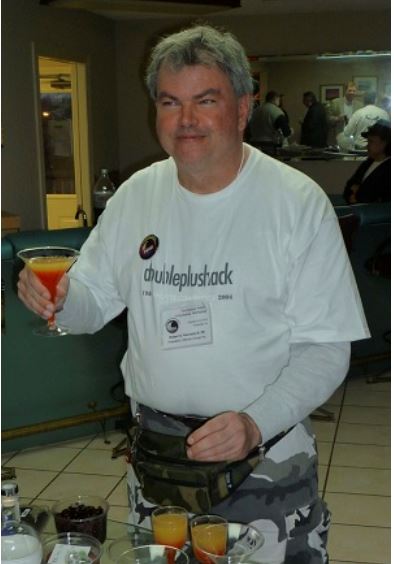
I4IS Director Robert Kennedy with his Alpha Centauri Sunrise at TVIW 2013

We live in exciting times. We live in an age where we are now aware of countless thousands of planets out there in the galaxy, orbiting other stars. This is an exciting discovery which must surely urge us onwards to go discover what is truly out there. But getting there is no easy trick. The stars are a vast distance away the nearest Proxima Centauri is 4.4 light years away, or around 270,000 Astronomical Units. This means that if you wanted to order a glass of Robert Kennedy’s famous Alpha Centauri Sunrise (contact us for recipe), you would have to wait nearly 9 years to receive your order. Let’s hope the Tennessee moonshine keeps that long. So the stars are a very long distance away. This means that if you’re going to send people, you need a big vessel with all the supplies and water that you need to sustain that population throughout the trip which could be anything from decades to centuries long.

Rough order of magnitude estimates for people requirements on a space habitat, based on the work of Gerald O’Neil and others in the 1970s and also work by the Russians, is anything between 15 – 65 tons/person. This means that if you want to send 1,000 people to colonise the nearby star systems, you are already at a mass requirement of 15,000 – 65,000 tons. And then you have to include the mass of the spacecraft, propulsion system…not to mention the fuel. The British Interplanetary Society Project Daedalus study was for a flyby robotic probe only, but the probe was 450 tons and the fuel requirement was 50,000 tons of deuterium and helium-3. This all suggests that crewed starships are likely to be big in mass (unless you go for embryo type models). Let’s say this was the basis of the engine for the crewed vessel, and then you’re looking at a starship which may be something like 100,000 tons in mass at a minimum.
The current cost of access to Earth orbit varies between launch provider and launch system, but approximately is anything from between £20,000/kg to £50,000/kg. If you were to then try and build your starship from Earth sourced materials only, for our example 100,000 tons vessel, you’re looking at a launch cost of something like £2 trillion to £5 trillion. And that’s just the launch cost and doesn’t include the research and development, design, manufacture and mission utilisation costs. So we rapidly reach another conclusion, crewed starships will be in the trillions of pounds at a minimum.

There are several companies today trying to beat the mould on access to Earth orbit, to change the paradigm in the old ways of doing things. The first is Space Exploration Technologies Corp (SpaceX) which is run by the inspirational business entrepreneur Elon Musk. He is making terrific progress in producing a cost-effective business model using a fully reusable Falcon-9 based system. His target goal is to get to a business model where the cost to Low Earth Orbit is around $1,100/kg or less is very achievable, and this is carrying a 13 tons payload.  As well as Earth orbit, Musk also has his sights set of Mars, and in particular it is his personal goal of eventually enabling human exploration and settlement of the red planet, perhaps within the next 10-20 years.

SpaceX Falcon-9 Launch Rocket

Anther bold initiative is the efforts of Reaction Engines Ltd to develop a Single Stage To Orbit Spaceplane, known as Skylon. This vehicle would take off from a conventional runway, accelerate to Mach 5 using the atmosphere and then switch on its internal liquid oxygen supply to take it all the way to orbit. It would release a 15 tons payload and then re-enter the atmosphere and prepare for another flight. This is the brainchild of the British inventor and rocket engineer Alan Bond, also famous for his pioneering leadership of the Project Daedalus study. The company claims once fully operational it would reduce the cost of access to Earth orbit to around £650/kg.

Reaction Engines Ltd Skylon Spaceplane

But what does this all mean for the Starship. As I showed earlier, we can’t build a Starship by just lifting thousands of tons of material off the Earth, including water, soil, air, food, structure, materials. This is not the way to building a sustainable solar system economy, which is what we do need in place before the advent of a true interstellar capable society becomes attainable. What it does do however, is allow us to do more in space, to go more places in the solar system and beyond, and begin the process of setting up the necessary industry and planetary wide colonisation. Once this is done, and other activities happen such as asteroid mining industries for example, the space based societies will start to develop their own economy independent of Earth. When that happens, the Universe is open to us and we have cracked the multi-planet species problem. The construction of large starships then becomes more reliable as we can use the resources of space, instead of pillaging the Earth for all its wealth. It is not clear which of the two economic models above is the best way to achieving the multi-planet species goal, Falcon-9 based systems, or Skylon based systems. What we can be sure of however, is that both are likely to play a role in our future and for their valiant efforts, they should both be encouraged, admired, and supported so that an inspirational path for the human race can be laid out.


Kelvin.F.Long, Executive Director


Primary Sidebar

Blog

Mission to an Interstellar Object

5 May 2026

Adam Hibberd Many readers in-the-know will have heard of the future ESA ‘Comet Interceptor’ mission, due to launch in 2029. For those not-in-the-know it is a spacecraft desgined to loiter at the famous Sun/Earth Lagrange 2 (L2) point for a few years, waiting for a ‘pristine’ Oort Cloud comet to come flying in to the […]

Members Newsletter – April

30 April 2026

Dami Lee on Project HyperionWe were really happy to see that our Project Hyperion competition (https://www.projecthyperion.org/) captured the imagination of the architect and Youtuber Dami Lee, who posted a detailed and thoughtful video commentary ‘Can Humans REALLY Leave Earth?’ Over one million views! Check it out: https://m.youtube.com/watch?v=BBb2gC0lByk&pp=0gcJCVACo7VqN5tD(You may want to skip the ads that are […]

Members Newsletter – March

31 March 2026

News from i4isThe i4is Educational team are currently recruiting! If any of our members are interested, and especially if you are in striking distance of London or Lincoln, both in the UK, we could do with support at the April events mentioned below. You can read about some of the activities in recent issues of […]

Principium 52

2 March 2026

Principium 52 has gone out to subscribers and is now accessible to all

Join i4is for a journey to the stars!

Members get access to exclusive videos. Here's a taster:

Join now

Footer

Contact i4is

Initiative for Interstellar Studies
27/29 South Lambeth Road
London, SW8 1SZ
United Kingdom

info@i4is.org

Starship Blog

Mission to an Interstellar Object

Members Newsletter – April

Members Newsletter – March

Principium 52

Donate

The Initiative for Interstellar Studies is entirely dependent upon the goodwill of its volunteer teams, the minor amounts we receive from our activities and the sale of our merchandise but also the kindness of donors. In order to advance our mission of achieving interstellar flight over the next century, we need your help and support. If you are feeling generous we would very much appreciate your help in moving our mission forward. Make a donation » about Donate

  • Shop
  • Donate
  • Privacy & Cookies
  • Contact us

Initiative for Interstellar Studies Limited
27-29 South Lambeth Road, London, SW8 1SZ
Company Limited by Guarantee No: 09062458 (England and Wales)
Copyright © Initiative for Interstellar Studies · Built by Jason King

Manage Cookie Consent
To provide the best experiences, we use technologies like cookies to store and/or access device information. Consenting to these technologies will allow us to process data such as browsing behaviour or unique IDs on this site. Not consenting or withdrawing consent, may adversely affect certain features and functions.
Functional Always active
The technical storage or access is strictly necessary for the legitimate purpose of enabling the use of a specific service explicitly requested by the subscriber or user, or for the sole purpose of carrying out the transmission of a communication over an electronic communications network.
Preferences
The technical storage or access is necessary for the legitimate purpose of storing preferences that are not requested by the subscriber or user.
Statistics
The technical storage or access that is used exclusively for statistical purposes. The technical storage or access that is used exclusively for anonymous statistical purposes. Without a subpoena, voluntary compliance on the part of your Internet Service Provider, or additional records from a third party, information stored or retrieved for this purpose alone cannot usually be used to identify you.
Marketing
The technical storage or access is required to create user profiles to send advertising, or to track the user on a website or across several websites for similar marketing purposes.
  • Manage options
  • Manage services
  • Manage {vendor_count} vendors
  • Read more about these purposes
View preferences
  • {title}
  • {title}
  • {title}