Adam Hibberd
On the request of a colleague, I have solved the problem of exploiting the powerful SpaceX Starship (in fact the yet to be launched Block 3 variant) to lift a spacecraft so that it can catch up with 1I/'Oumuamua, the now rapidly receding 'interstellar object'.
This object sped through the inner group of Solar System planets in 2017, and then headed away again, back into interstellar space.
It left a mountain of questions in its wake, which a spacecraft flyby mission could answer, returning tremendous scientific data in the process.
I used the currently in production Centaur V cryogenic liquid propellant stage and also the STAR 48B solid propellant booster, in addition to the Starship upper stage.
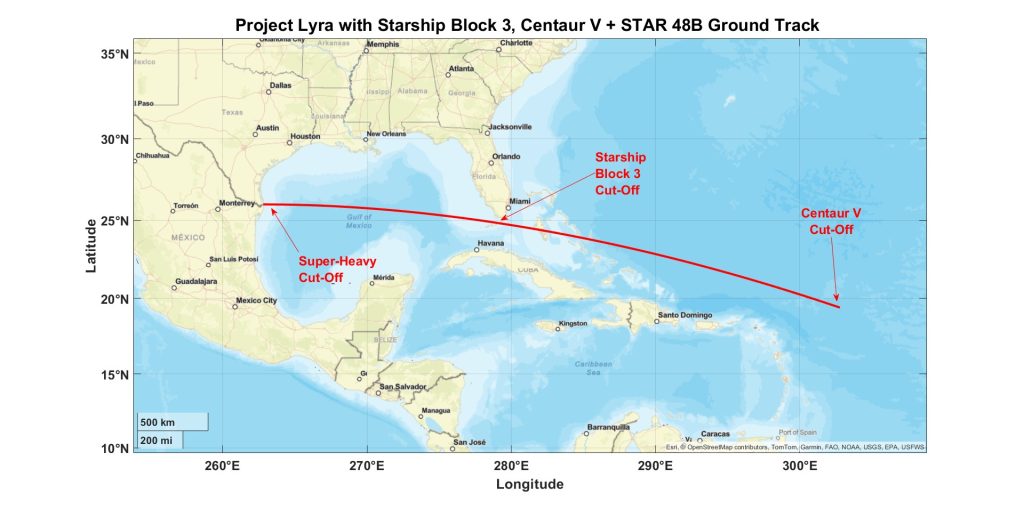
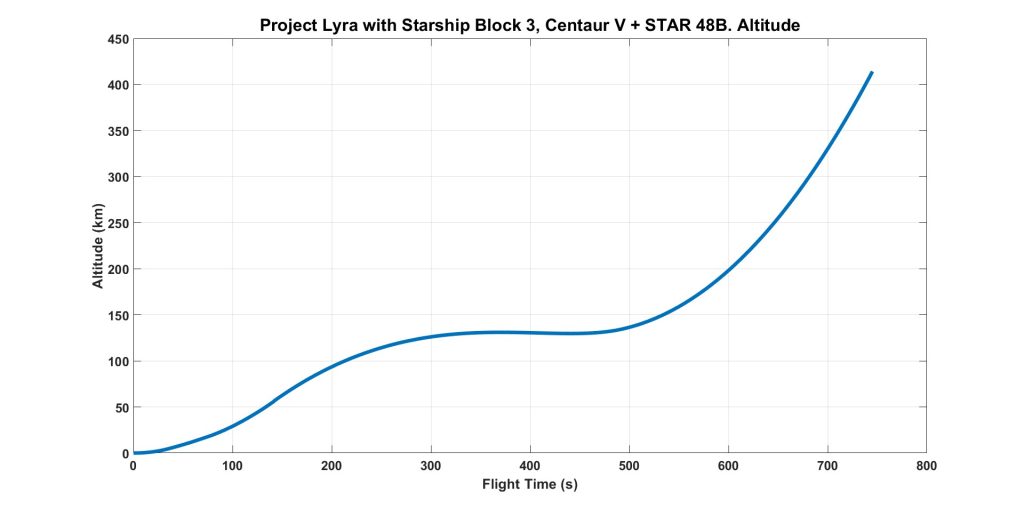
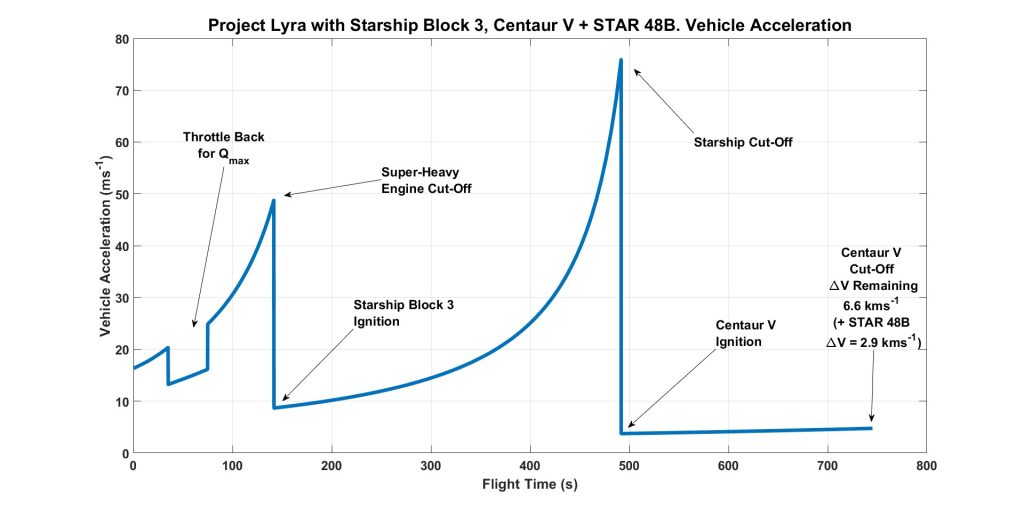
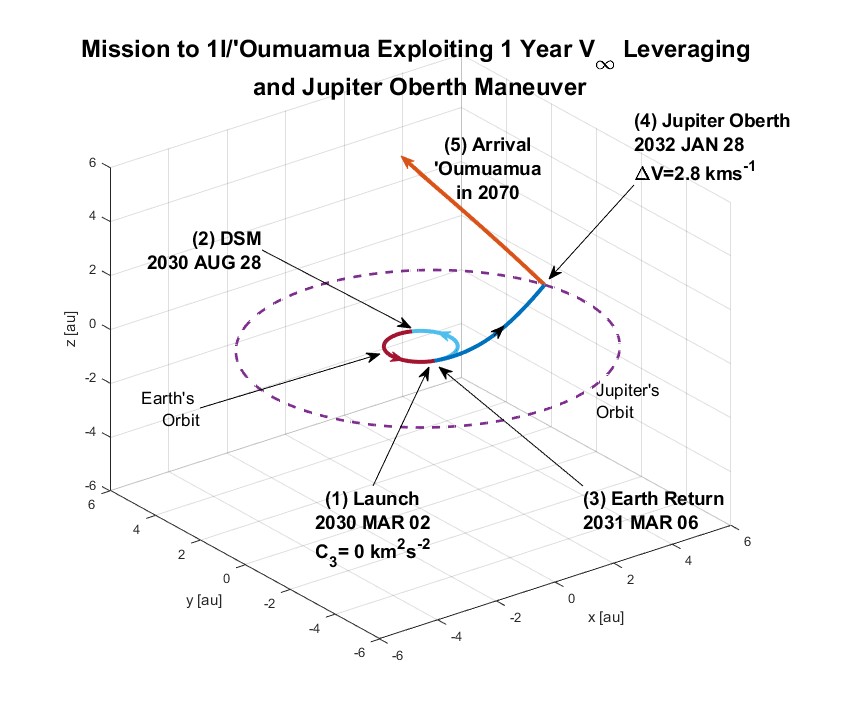
To do this research I needed to optimize both the geocentric launcher-ascent-to-orbit trajectory (i.e. the trajectory which maximises the mass-to-Earth-escape) and the subsequent heliocentric interplanetary trajectory designed to chase 'Oumuamua down, and into which the Starship inserts the Lyra spacecraft.
The geocentric and heliocentric trajectories are shown in the plots below. The first three show the Starship ascent directly to an Earth escape orbit, and the fourth shows the interplanetary trajectory to catch 'Oumuamua after 40 years.
My software 'Optimum Interplanetary Trajectory Software' (OITS) was used in the process of conducting this research.